
The Big Box Boredom Trap – Why Your Routine Is the Reason Your Progress Has Stalled
Key Takeaways
- Your body adapts to repetitive workouts through General Adaptation Syndrome, causing progress to plateau when the same routine becomes too familiar
- The common “3 sets of 10” approach on gym machines lacks the progressive overload and variety needed for continued improvement
- Periodization strategically varies volume, intensity, movement patterns, and energy systems to force ongoing adaptation
- PIT’s varied programming ensures no two workouts are identical while maintaining systematic progression toward your goals
- Group training provides built-in accountability, motivation, and coaching oversight that solo gym sessions cannot replicate
You walk into the gym, tap your key fob, and head straight to your usual spot. Maybe you warm up on the treadmill for five minutes, then do the same machines in the same order. It’s comfortable, predictable, and requires minimal thought. Sound familiar? This repetitiveness often drives people into fitness plateaus-where that initial wave of progress conks out, leaving you wondering why your body no longer responds.
If you’re tired of putting in time without reaping results, you’re not alone. Many gym-goers in Conshohocken experience this stagnation, convinced that simply “showing up” is all it takes. In this article, you’ll learn exactly why the body stops adapting after a while, and how specific training approaches-including structured fitness programming at PIT Conshohocken-overcome fitness plateaus with strategic, science-backed variety.
The Law of Diminishing Returns – Why Your Body Stopped Changing
One of the main laws governing fitness adaptation is the concept of diminishing returns. In your first few weeks of working out, every session can feel transformative. You might see your strength, endurance, or muscle tone skyrocket. This rapid change is partly because your body was new to the stress and responded dramatically.
Over time, that effectiveness fades. Exercise scientists often attribute this plateau to what’s called General Adaptation Syndrome (GAS). Initially, your body perceives exercise as a stressor and makes rapid improvements to tackle that stress more efficiently-your muscles get stronger, cardiovascular stamina improves, and energy metabolism ramps up. But once your body gains familiarity with the routine, it becomes incredibly efficient, requiring less effort to complete the same tasks.
As your muscles, cardiovascular system, and metabolism adapt, the training stimulus that once felt challenging no longer pushes your body to grow. Many people perceive that as “I guess I’m just not trying hard enough,” but the truth is you can’t override adaptation by willpower alone. You need to change your workout variables-like intensity, duration, exercise order, or load-to force further adaptation.
This is why so many well-intentioned gym-goers in Conshohocken find themselves stuck. They’ve mastered the old routine, and while it still burns a few calories, it no longer ignites real progress. Without a deliberate plan to escalate the challenges, you’ll keep running into the law of diminishing returns.
The 3-Sets-of-10 Trap – The Problem with Predictable Programming
Most traditional “big-box” gyms are set up in a way that practically begs you to do 3 sets of 10 reps on each machine. You walk in, follow the row of equipment, and perform the same rep scheme day after day. It’s easy to see why people fall into this pattern: it feels safe, requires minimal planning, and aligns with the same “one-size-fits-all” approach that countless beginners adopt.
But predictable programming-where you rarely deviate from the same exercises or rep counts-is the guaranteed route to stagnation. Early on, you get a spike in strength or muscle definition. Then progress halts. Doing predictable sets and reps leads to two main problems:
- Mental burnout and boredom When your workout becomes a rote memorization exercise, your brain checks out. You go through the motions instead of truly challenging your limits.
- Lack of progressive overload Your body needs a gradually escalating challenge-heavier loads, higher intensity, or new movements-to keep making gains. Doing the same 3 sets of 10 over and over again will never create that needed surge in effort.
Before long, you might notice your sessions feel too comfortable. Rather than stepping up the intensity, you stick to what’s familiar. This “comfortable workout” paradox means you’re exercising faithfully but not truly pushing your body to adapt. It’s not necessarily laziness; it’s simply the absence of a more strategic plan.
Periodization – The Science of Strategic Variety
Every serious athlete lives by a principle called periodization, a training framework that structures variation over specific blocks of time to elicit performance gains. Rather than random “muscle confusion,” periodization is a calculated strategy for ensuring your body never has the chance to get too cozy with any one type of exercise.
Here are four key variables that periodization manipulates:
- Volume: How much total work you do, measured in sets, reps, or time under tension.
- Intensity: The load, speed, or perceived exertion.
- Movement patterns: Swapping out exercises that work the same muscle groups from different angles or with different equipment.
- Energy systems: Balancing aerobic (endurance) and anaerobic (high-intensity) segments.
A classic example is when athletes split their training year into phases, focusing on endurance one month, then strength, then power, and so on. This constant shift in approach forces the body to adapt to new challenges. It also helps avoid overuse injuries and mental burnout.
Research from organizations like the National Strength and Conditioning Association (NSCA) explains how carefully planned periodization can supercharge results and reduce injury risk. By incorporating variation into your workout plan on a weekly, monthly, or seasonal basis, you ensure that your muscles never settle into full efficiency with a single routine. Strategic programming isn’t a guessing game; it’s a meticulous blueprint that says to your body: “Guess what? We’re going to switch things up just as you start mastering the old challenge.”
The PIT Solution – Varied HIIT Programming That Forces Adaptation
At PIT Conshohocken, we pride ourselves on a varied programming philosophy that applies periodization principles to HIIT (High-Intensity Interval Training) in a dynamic, accessible way. Rather than randomly throwing new moves at you, we incorporate consistent progression into every session to ensure your body faces a fresh challenge each time you walk through our doors.
Here’s how we remove the guesswork:
- Never the same workout twice Every class is curated to target different muscle groups and energy systems. We might focus on power and speed in one session, endurance in another, and stability in the next-all of which helps you avoid adaptation plateaus.
- Strategic progressive overload Our coaches gradually add weight, modify rest intervals, or introduce new movement patterns before your body gets comfortable. Think of it as a guided progression plan rather than leaving it to random chance.
- Functional and varied movements Instead of parking you on a machine, PIT workouts often integrate compound lifts, explosive bodyweight drills, and purpose-driven movements. This “move like an athlete” approach helps you build real-world strength and agility.
- Intensity that demands adaptation HIIT is famous for boosting metabolism and cardiovascular endurance in a fraction of the time. By interspersing high-intensity intervals with active recovery, you torch calories while training muscles to handle elevated workloads.
When you switch from a traditional gym routine to a place where every workout is purposely different-but still systemically progressive-you circumvent that dreaded plateau. You’ll soon realize just how much your body can continue improving when guided by a programming approach that systematically evolves.
(For details on how each class is structured, check out our class schedule and see how a dynamic programming approach ensures continuous personal progress.)
The Group Advantage – Why Solo Gym Sessions Cap Your Potential
Working out alone can be freeing at first: you get to choose your music, phone breaks, and rest times without judgment. Yet, the more frequently you train in isolation, the more likely you’ll hit personal sticking points. According to some research on group vs. solo exercise, participants in group settings often push themselves harder and feel higher satisfaction levels, translating to better results.
What happens in a group:
- Built-in accountability You’re less likely to skip a workout when your peers and coaches expect you to show up.
- Stronger motivation Seeing the person next to you push through a final rep or sprint can spark your own performance surge.
- Coaching oversight A qualified coach can spot imbalances, correct your form, and encourage you to step just beyond your comfort zone. This prevents you from selling yourself short.
- Camaraderie and energy The vibe in a group workout fosters healthy competition, which drives you to a higher effort level than you’d typically reach on your own.
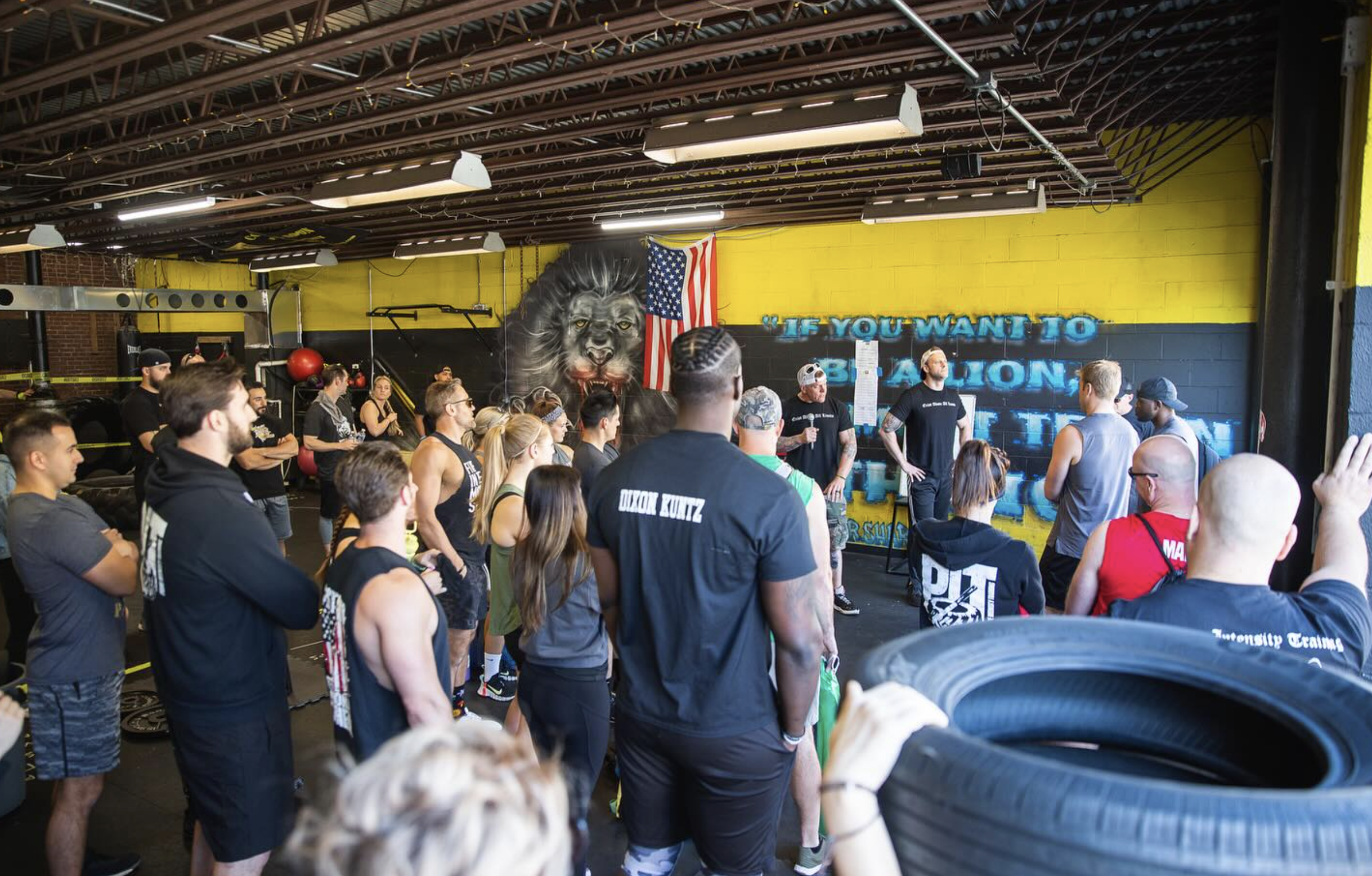
At PIT Conshohocken, we see it daily. Members come in expecting a quick sweat session but find themselves flowing in a current of contagious energy, tackling challenges they never thought possible. Group HIIT vs. solo gym is a game-changer; the momentum of others can be the difference between plateau and triumph.
Beyond the immediate workout benefits, the relationships you build in group fitness create lasting accountability. When you know your workout partners expect to see you, skipping a session feels different than when nobody notices your absence. Many of our members describe their PIT classmates as their “fitness family” – people who celebrate their victories and push them through difficult moments. This social investment in your progress helps maintain consistency, which is ultimately the key to breaking through any plateau.
(If you’re curious how signing up for group classes can transform your motivation, check out our First Visit page to learn exactly what to expect on day one.)
Break the Cycle – Try a Coach-Led HIIT Session
Taking the leap out of your comfort zone can feel intimidating, especially if you’ve been doing the same routine for months-or years. But breaking the cycle often starts with a single step into a coach-led HIIT class. From the moment you step into PIT Conshohocken, you’ll sense the difference in intensity, engagement, and camaraderie. It’s not about performing random exercises; it’s about experiencing carefully programmed periods of effort that adapt with you.
Expect to be challenged in new ways-pushups with tempo changes, short bursts of sprints, or lifts that keep your body guessing. Our coaches monitor your form and progress, making real-time adjustments to ensure you’re always working at the right intensity for your fitness level. The result? A new wave of adaptation that reignites your progress and rekindles your love for working out.
Frequently Asked Questions
Why do fitness plateaus happen even when I work out consistently?
Plateaus occur because your body is remarkably adaptive. Through General Adaptation Syndrome, your muscles, cardiovascular system, and metabolism become efficient at handling familiar stresses. What once challenged you becomes easy, requiring less effort and producing fewer results. Without changing variables like intensity, exercise selection, or volume, your body has no reason to continue adapting and improving.
What is periodization and how does it prevent plateaus?
Periodization is a systematic approach to training that strategically varies workout variables over time. Instead of doing the same routine indefinitely, periodized programs cycle through different focuses-such as endurance, strength, and power-to continually challenge your body in new ways. This prevents adaptation plateaus while also reducing injury risk and mental burnout.
How is PIT’s programming different from what I’d do at a regular gym?
At a regular gym, you’re responsible for creating and varying your own workouts-something most people don’t do effectively. PIT’s varied programming applies periodization principles professionally, ensuring every session targets different muscle groups and energy systems while maintaining progressive overload. You get expert-designed variety without having to plan it yourself.
Can I really get better results from group fitness than working out alone?
Research consistently shows that people push harder and achieve better results in group settings. The combination of social accountability, competitive energy, and professional coaching creates an environment where you’re less likely to cut corners or skip sessions. Many people discover they can achieve far more than they thought possible when surrounded by motivated peers and expert guidance.
I’m intimidated by HIIT classes. Are they appropriate for beginners?
Absolutely. At PIT, every movement can be scaled to your current fitness level. Beginners might use lighter weights, take longer rest periods, or perform modified versions of exercises-while still benefiting from the structured programming and group energy. Our coaches are trained to help newcomers feel comfortable and challenged at the appropriate intensity for their abilities.
Break the Cycle of Boring Workouts. Try a Coach-Led HIIT Session at PIT Conshohocken and discover what your body is truly capable of when given the right challenge.