
Key Takeaways
- Boxing is the only training format in this series that is also a skill. Kettlebells build power, med balls build rotation, iron builds strength. Boxing builds all three while teaching you something you get better at for the rest of your life, which is exactly why members stay with it.
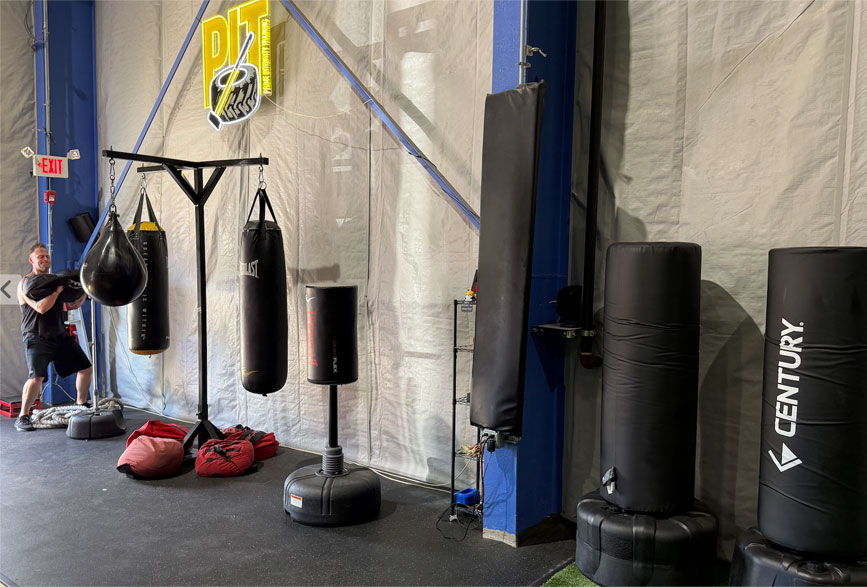
- The heavy bag is the most complete conditioning tool on the PIT floor. Punch output, footwork, core rotation, and round based interval structure combine for 500 to 800 calories in a 45 minute session.
- Focus mitt work with a coach is where technique becomes real. Mitts add targets that move, combinations that respond, and the immediate feedback loop that no bag or mirror provides.
- Wraps and gloves matter more than beginners think. Hand wrapping is the first skill every PIT boxer learns, and it is the reason our members punch hard for years without hand and wrist issues.
- Boxing at PIT is fitness boxing: full contact with equipment, never people. No sparring, no getting hit, all of the conditioning and skill with none of the bruises. Available in class programming at both King of Prussia and Conshohocken.
Prime Intensity Training | Boxing Conditioning at Both Locations
King of Prussia: 538 Swedeland Rd, KOP PA 19406 | Inside Steelyard Sports Complex Conshohocken: 263 East Elm Street, Conshohocken PA 19428
Call (484) 744-0568 Class packages from $75 per month |
primeintensitytraining.comOur logo has a sledgehammer and a tire on it, but if you asked me what sound defines PIT, it is not steel hitting rubber. It is the rhythm of gloves on a heavy bag, that percussive one two, one two three that rolls across the floor when a boxing block starts, and the way total strangers fall into the same rhythm within a round.
This is the finale of our four part equipment series, after the kettlebell, the medicine ball, and the dumbbell versus barbell question. We saved boxing for last on purpose, because it is the one that turns members into lifers. We covered what our boxing classes look like in an earlier post. This one goes deeper: the actual equipment on our floors, the technique we teach on each piece, and why this format produces results and loyalty like nothing else we coach.
The Heavy Bag: An Opponent That Never Quits
The heavy bag is one hundred pounds of honest feedback. It does not care how your day went, it registers exactly how much you put into every punch, and it will be there for the next round no matter what you did to it in the last one.
What We Teach on the Bag
Every PIT member who boxes learns the same foundation, in the same order, because the order matters. Stance and guard come first: feet staggered, hands home at the cheekbones, chin down. Then the four punches that build everything else: the jab, the cross, the hook, and the uppercut, each numbered so coaches can call combinations across a loud room. One is the jab. Two is the cross. Three and four are the hooks. When a coach calls one two three, every member on the floor knows exactly what their hands should do.
The PIT technique standard: power comes from the ground, not the arm. A proper cross starts at the rear foot, drives through hip rotation, and arrives at the bag as the last link in a chain, which is why members who learned rotation with our medicine ball throws pick up punching mechanics twice as fast. It is the same engine. Exhale on every punch, hands return home immediately, and the guard never drops just because you are tired. Especially because you are tired.
What the Bag Produces
Round based bag work is interval training in its most engaging form: three minutes of output, one minute of recovery, repeated. The American Council on Exercise places boxing conditioning among the highest caloric output formats measured, and a 45 minute boxing heavy class at PIT typically produces 500 to 800 calories depending on bodyweight and intensity. Beyond calories, sustained bag work builds shoulder endurance, rotational core strength on every single punch, footwork and coordination, and the kind of cardiovascular capacity that shows up everywhere else in your training.
Focus Mitts: Where a Coach Turns Punches Into Boxing
If the bag builds the engine, the mitts build the driver. Focus mitt work puts a coach directly in front of you with padded targets, calling combinations, moving the targets, and giving you the thing no bag can: a response.
Mitt work is the fastest technique accelerator in boxing because the feedback is instant and specific. Your coach feels every punch land. They know immediately if your cross is arm only or if your hips came with it, whether your hook is tight or looping, whether your guard returned home or drifted. And they adjust the next call to fix exactly what they just felt. It is the most concentrated dose of coaching per minute anywhere in our programming, and it is the part of boxing training our members describe as addictive.
Mitt rounds also sneak in footwork and defense. Coaches move, so you move. Coaches call slips and rolls between combinations, so your conditioning includes reaction and head movement, not just output. Members who thought boxing was about arms discover in their first mitt round that it is about everything from the ankles up.
Wraps and Gloves: The Equipment Ritual That Protects You for Life
Here is a piece of equipment truth most fitness boxing programs skip: the most important gear in boxing costs about ten dollars and takes four minutes to put on.
Hand Wraps First, Always
The human hand has twenty seven bones and none of them were designed to hit a hundred pound bag. Hand wraps bind the wrist, knuckles, and thumb into a single supported structure so force transfers into the bag instead of into your joints. Every new PIT boxer learns to wrap in their first classes, coaches check wraps until the habit is automatic, and it is the reason our long term members punch hard year after year without the hand and wrist complaints that follow unwrapped enthusiasm everywhere.
Gloves: What to Use and When to Buy Your Own
Bag gloves at twelve to sixteen ounces provide the padding for sustained heavy bag and mitt work. New members can begin with basics, and most buy their own pair within a few weeks, partly for fit, mostly because gloves are personal in the way running shoes are personal. Our coaches will happily tell you exactly what to look for before you spend a dollar: wrist support first, padding density second, brand names last. Bring them to any class at either location and they live in your gym bag from then on, which does something subtle and powerful: owning your gloves makes you a boxer, and boxers show up.
Why Boxing Owns Stress Relief on the Main Line
Our evening boxing blocks fill with a very specific crowd: people who spent the day managing teams, patients, clients, and inboxes from Center City to the Route 202 corridor, and who discovered that thirty minutes of bag work deletes a workday like nothing else legally available.
There is real mechanism under that experience. High intensity output drives the endorphin response that follows any hard training, but boxing adds something the treadmill cannot: total cognitive occupation. A six punch combination with a slip in the middle requires complete presence. There is no bandwidth left for the meeting that went sideways. Members from Gladwyne, Wayne, and Villanova tell us the same thing in different words every week: it is the only hour of the day their mind actually stops. That mental clearing, stacked on top of elite level conditioning, is why boxing members become PIT’s most consistent attendees, and consistency, as we say around here constantly, is the entire game.
PIT Member | Villanova, PA
Boxing Inside the Bigger PIT System
Boxing at PIT does not live in isolation. It sits inside the same coached, progressive system as everything in this series. The rotational power you built with medicine balls becomes punching power. The conditioning base from cardio core classes lets you finish rounds strong. The kettlebell and free weight strength keeps your shoulders durable through thousands of punches. Every tool feeds every other tool, which is the entire philosophy of functional training and the reason PIT members get results that single format studios cannot match.
Boxing appears in class programming at both locations weekly. All class packages cover both gyms and every format: Spark 4 Pack at $75 per month, Iron 8 Pack at $140, Steel 12 Pack at $170, and Hammer & Tire unlimited at $190 per month. The current schedule is on the site, and the King of Prussia location at Steelyard Sports is minutes from anywhere on the Main Line.
Wrap your hands. Find your rhythm. Leave the day on the bag.
PIT King of Prussia: 538 Swedeland Rd, KOP PA 19406 | PIT Conshohocken: 263 East Elm Street
Call (484) 744-0568
Packages from $75 per month at primeintensitytraining.comFrequently Asked Questions : Boxing Training at PIT
No. Most PIT members who box had never wrapped their hands before their first class. Coaches teach stance, guard, and the four punches from zero, and every drill scales. Boxing at PIT is full contact with bags and pads, never with people.
PIT floors are equipped with heavy bags and coaches run mitt work in classes. Start with basic gloves, and plan to buy your own gloves and wraps within a few weeks. Coaches teach hand wrapping in your first classes.
A 45 minute boxing based class at PIT typically produces 500 to 800 calories depending on bodyweight and intensity, combining punch output, footwork, core rotation, and round based intervals.
It is arguably the best in fitness. High intensity output drives endorphin release while combination work demands total mental presence. Members commuting home to the Main Line schedule evening boxing classes for exactly this reason.
Both PIT locations run boxing based training weekly: King of Prussia at 538 Swedeland Rd inside Steelyard Sports, and Conshohocken at 263 East Elm Street. Call (484) 744-0568 or see class packages and the schedule.